The best leaders know that understanding themselves is the first step to understanding others.
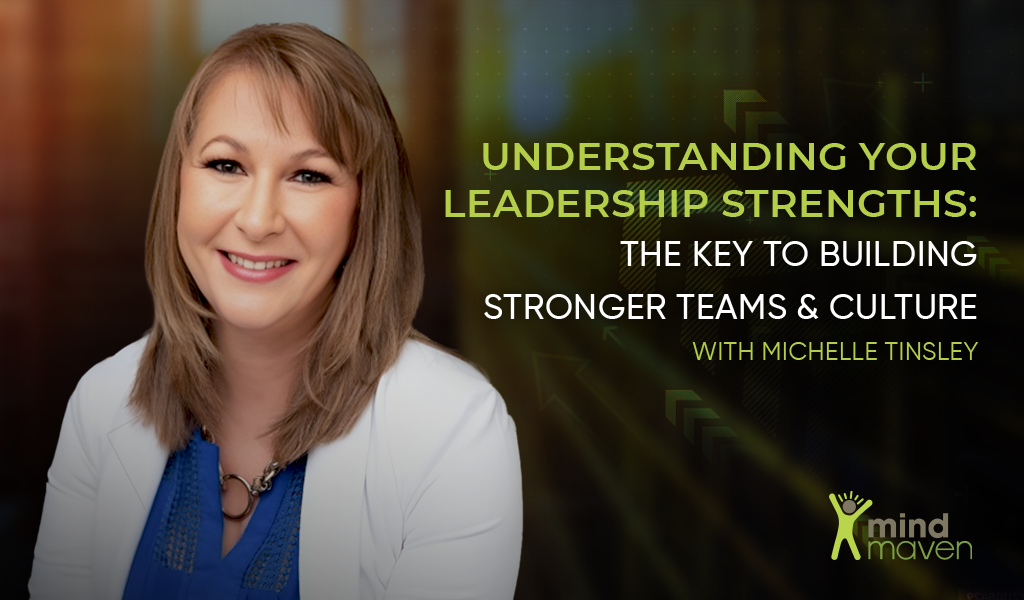
That’s the philosophy that drives Michelle Tinsley, CEO of Sciata, who sat down with Senior Executive Coach Connor Drake to discuss what it takes to build stronger teams and a more connected culture.
Michelle is a seasoned technical leader who spent 26 years at Intel in Finance, General Management, Product, and Sales roles before transitioning into the startup world.
In this conversation, Michelle shares how these experiences have shaped her understanding of her leadership strengths and how she helps her teams grow and succeed.
From leveraging tools like the DISC assessment to seeing feedback as a gift, Michelle offers a masterclass in how self-awareness as a leader can drive both performance and culture.
Keep reading until the end of the article to access your free How I Work Document – a practical tool to communicate your leadership style and empower your team to do their best work.
What Human First Leadership Means in Practice
Connor: The phrase Human first leadership can mean a lot of different things to a lot of different people. What does it mean for you as you’re leading your company?
Michelle: I think it really means meet each employee, or a customer, or sales prospect where they’re at.
Having the same consistent approach and treating everybody the same as a widget just doesn’t work.
Everybody has good days, bad days. Try to understand where they’re coming from and how maybe we can work together.
Understanding Your Leadership Strengths Through the DISC Assessment
Connor: You had mentioned that during your time at Intel you took an assessment, I think you called it the DISC assessment.
Can you tell me a little bit more about that assessment and what you learned about yourself through that process?
Michelle: The reason why I like this one is based on the philosophies of Carl Jung, so it really gets into your inherent behaviors and what motivates you.
DISC stands for four different acronyms:
- Dominance
- Influence
- Steadiness
- Conscientiousness
And everybody has a blend of all four of those.
It’ll have you look at what’s your number one, highest of those four, and what’s your lowest, and kind of what’s your secondary, and how do they play together as a leader.
The role of the leaders is then be the flexible one and say, “Okay, let me more than meet them halfway, let me go over to their style and kind of help them out.”
Discovering Strengths: People-Oriented Leadership at Intel
Connor: Did you learn anything surprising about yourself by taking the DISC assessment?
Michelle: I did. So the four acronyms, two of them are people that are very task-oriented to begin with, which are the Ds and the Cs.
And then there’s the other half, which are very people-oriented, meaning they kind of come first from the person and then get to the result. And those are the I’s and the S‘s.
What I learned was, I’m actually the highest I – influencer – which at the time I was in finance at Intel as a manager and controller.
And so I had to be very results-oriented, but influencing the right business in, you know, decision or outcome was key to our job. So, hence I was good at it because of the high I, but I also had a high D.
But when we stood back as a leadership team and looked across the 30 finance managers in the assessment, I was one of two that was with the people side being our number one metric. The other 28 were all task.
And so I kind of went, this is why people are coming to me going, you’re very different as a manager. Because I was, again, people-oriented first, and then yes, I can very much get to the task.
But whereas the other 28 in the sample were all coming at it from task, task, task, and may not get to the people side of things.
Leveraging Leadership Strengths and Building Balanced Teams
Connor: Do you feel like learning that about yourself, did that encourage you to lean more into your strengths, focus more on bolstering your weaknesses, or maybe a combination of both?
Michelle: I’ve always been a lean on your strengths kind of person, because again, nobody’s ever gonna be perfect.
What that inherently means is I’m low on the S, which is honoring history and traditions and keeping things the same, and don’t rock the boat.
My whole career has been in tech. So, luckily, I found an industry that’s okay with being disruptive and changing stuff.
Lean in and leverage those strengths, but also then know that because I’m never going to be on the C side – the most detail-oriented, conscientious, 50 pages deep on backup, making sure all the numbers tie – I need those people that are inherently, that’s their number one strength.
I need those people on my team because again, the whole team, we need to have that well-rounded output.
And so admitting that giving yourself grace and going the good news is as a leader, we can be a diverse team, and I can bring people with those inherent skill sets onto my team.
Coaching vs. Directing: Finding the Balance in Leadership
Connor: Usually, when you think of leading people from a relationship-focused perspective, it’s very coaching-driven.
For someone who’s maybe a little bit more task-driven on the leadership front, they tend to be more directive.
So, would it be a fair assumption to say that you tend to naturally lean a little bit more toward the coaching side?
Michelle: I do, and again, one of my development areas is to know, okay, there are certain situations when you just got to, like in the case of a burning building, yell, “Get out!”
It’s not like, “Hey, I’m thinking like maybe you should make your way towards the stairwell.”
So looking at things situationally and going, where’s the business situation? Where I do need to be directive and set the expectations? And we have to, as a team, salute and run forward.
And which of these are opportunities for growth where I go, you know what, I’m going to let them take the ball and I’m going to take a back seat.
I’m going to coach them through it, and they may not do it exactly the way I would do it. But you know what? They got to a decent result and we learned from it, and they now have done something they’ve never done before.
The more they do that, the better they’re going to get. And that’s very empowering to me because I go now, I don’t have to do that. I don’t have to be the only one.
Even at a smaller firm, we need to be sure that there’s always backup solutions from a capability standpoint.
It’s something that should be seen as empowering because now that frees us up to go do bigger things, new things.
Feedback is a Gift: How to Build Trust and Growth In Your Team
Connor: Would it be fair to say that it’s easier to have that directiveness when your team also knows that you care about them?
Michelle: Yes. I’m doing this because I want to invest in you.
I always say feedback is a gift, and it came without a return receipt.
You don’t get to go give it back and fight and deny it.
You can tell as a manager that, “Oh, this is hitting an emotional cord, I better give them some time.”
Knowing your employees over time, they may want to send a head email of, “Hey, this week in our one-on-one, I want to turn it into more of a development session and give you some direct and honest feedback. It’s going to be around these points.”
Connor: I think a lot of people who maybe naturally gravitate toward the more relational side of leadership are worried about hurting someone’s feelings or breaking someone down, making them feel less than or incapable.
But shifting that perspective the way you have, where by choosing not to give them that feedback, you’re doing them a disservice.
If they know that you believe in them and they’ve told you what’s important to them, what they want their life, their career to look like. Feedback is how you help them get there.
Michelle: Being a leader is bringing up the uncomfortable dialogue and getting the employee to a place where they can embrace it and go, “You know what, you’re right. I want to because awareness is the first step to learning. I’ve got to be aware that this is something I need to work on.”
And then, also pile on and give them positive support when you see them trying the new things.
Because again, it’s gonna probably take them 14 times of trying the new thing to feel like they’re getting good at it. So don’t just kind of be silent for 13 and then on the 14th go, “Yay, you won.”
It’s like the 2nd, 3rd, 5th. I go, “I see you trying, and I love it. I love that you’re trying it. Keep going. Keep trying it again.”
Creative Team Building That Strengthens Connection
Connor: I was reading an article about an Iron Chef-style party that you hosted. Can you tell me a little bit more about that and what inspired that?
Michelle: It started with a budgetary need as we started price checking holiday parties at restaurants and places. It was going to be prohibitively expensive.
So I said, well, if we’re willing to take a risk, we can try what I’ve done before. I’ve done this with multiple teams at Intel.
We take the team and split it into two. Or if you’ve got a very large team, you can make it three.
But you’re dividing into the teams people that are great chefs and people that have never cooked before.
By blending the teams, people are kind of cross-pollinating across departments and working with each other.
They then, a week in advance, need to give me what they’re going to cook. I give them the assignment, like the Iron Chef.
The team that won was super excited. We knighted them with a Nerf sword and then gave them gift cards.
It was at my house. It allowed a lot of creativity and mixing, and again, you weren’t just sitting next to a person on the left and right or across the table.
People were mixing and mingling, and then we ate the food as our dinner and dessert. So it was very budget-friendly. Everybody said that was so much fun.
Connor: I can imagine that an environment like that is also going to get people who maybe wouldn’t typically work together closely to have to collaborate.
How often do you do all-hands events like this?
Michelle: We alternate – one quarter, we’ll do a community service. We just did this one this last quarter, where we did Feed My Starving Children.
So we packed up little bags of dehydrated food, and then they get 36 of those packs in a box, and then they ship them off around the world to refugees and non-government organizations that are there to help feed people and sustain their nutrition.
The prior quarter we did more of a team builder. We went to BAM Kazam, which is a hybrid of obstacle course slash escape room.
Then in the Q1 timeframe, we did again, another community service where we made dinner at a Ronald McDonald house.
So we try to alternate it with a team builder versus a community service.
How to Build Culture in Remote and Distributed Teams
Connor: I feel like you mentioned earlier on in this call that your team is at least somewhat distributed, right?
Michelle: Yeah, we have two executives in the Atlanta area now. And then the rest of the headquarters is in Phoenix. But we do have field workers who are all over the United States.
Connor: Would you be willing to share an example or two of something that you’ve done virtually to build that culture?
Michelle: Yeah, absolutely. So we’re doing, twice to three times a quarter knowledge sharing session with our technical workers where they get the opportunity to present something they’ve worked on that they think has applicability or sharing.
So lately it’s been a lot of like, here’s how I’m using generative AI validation tools for writing my software code, and again, spotlighting one of our workers to teach the others on how to do that.
In the past, at one of my startups, we also did just virtual happy hours where everybody grabs their own beverage. And then we have every 10 minutes a different topic in a Zoom room.
One would be hobby-centric, which it was either travel, golf, hiking, or other. So you end up in a Zoom room with people picking those hobbies.
These Zoom rooms are getting mixed up every 10 minutes. And the beauty of it, you’re with a different group of people that work great with very large groups. So we’re like, we have 50 to a hundred people on a call.
Advice for New Leaders: Redefining What Success Looks Like
Connor: For any leaders who are listening and aspiring to be that type of leader. Is there a piece of advice you would have for them?
Michelle: I think the hardest part about just being a new leader, new manager is – and it’s in the Ram Charan Leadership Pipeline book – you have to change what you value and how you define a good day when you’re an individual contributor.
A good day is like, I produced so much, you know? But when you’re a manager, it’s my team, look what they did.
I get excited being the cheerleader because they did something new, or they accomplished a goal, or they hit a height that they haven’t hit before.
So it’s really shifting your values, where you spend your time, and how you set your day-to-day priorities.
Absolutely has to be different as a manager and a leader. That natural kind of commitment level will follow.
It has to be authentic that way. I think an employee will feel if you’re doing it robotically, versus really being excited about joining the call with them and hearing how their day’s going and where you can actually help them.
The How I Work Document: Communicating Your Leadership Strengths, Style, and Preferences
In Connor and Michelle’s discussion, we discovered how understanding your leadership strengths – and empowering your team to embrace and grow theirs – is at the heart of long-term success.
Our How I Work Notion template helps you put that insight into practice.
This customizable tool gives your team a clear understanding of your leadership style, communication preferences, and decision-making approach, enabling them to collaborate with greater confidence and alignment.
By creating this kind of clarity, you strengthen trust, improve accountability, and build a culture where people feel supported to do their best work.
Get your free How I Work template here.
Or, if you’re ready to transform your daily workflows to free up 12+ hours every week and reach your fullest leadership potential, book a free call with a Mindmaven coach today: