
What Defines a Mission-Driven Company?
Purpose is the core of everything a mission-driven company does. It guides its decisions, culture, and long-term strategy. But it’s also a valuable asset for attracting and motivating employees and helping leaders ensure they create a lasting impact.
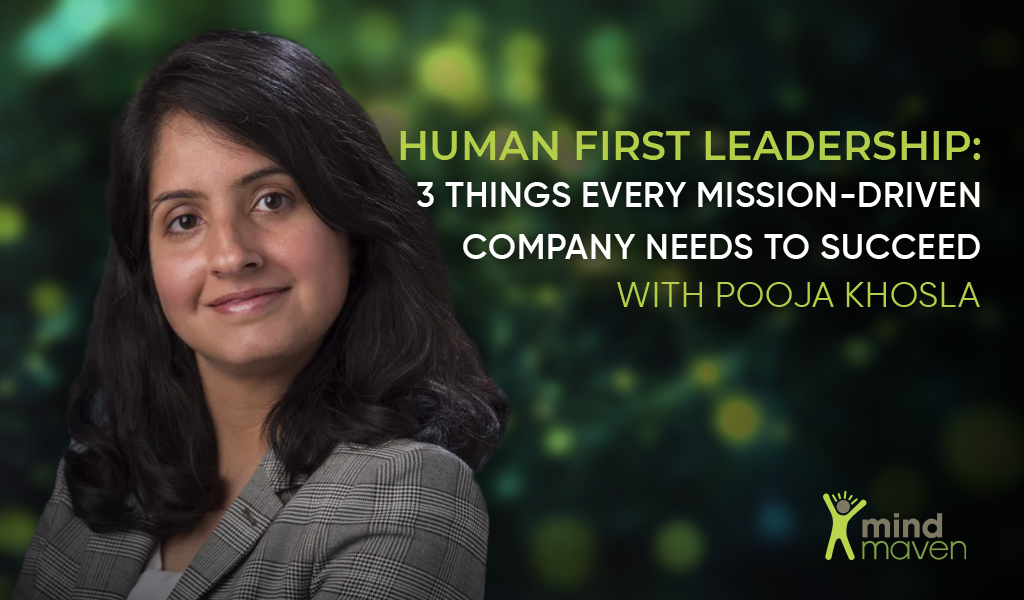
That’s exactly what Senior Executive Coach Connor Drake explores in this conversation with Pooja Khosla, CEO of energy and climate analytics company Entelligent.
Pooja’s journey from scientist to CEO may not be the typical route, but it’s a masterclass in leading with purpose, building trust, and aligning a company’s long-term vision with the goals of its people.
Along the way, she shares tactical, real-world advice every leader of a mission-driven company can put into action to drive success.
Plus, keep reading to the end to get your free North Star Goal Notion Template!
How a Mission-Driven Company Starts With a Bold Idea
Connor: You’re clearly a very mission and community-driven leader. I’m curious what shaped that part of your identity?
Pooja: I truly believe that it takes a village to make companies, to make leaders.
Similarly, as we raise our kids, we all start from a very promising idea to create a very promising future. We really need a lot of people to believe in the idea, believe in the mission, and contribute to the mission.
- You should have a very strong idea.
- You should have a lot of community around you that trusts your mission, that has shared goals.
- We need to be transparent because ideas fail, missions fail, and we should be able to bounce back and get back to our mission for shared goals.
The Journey From Scientist to Mission-Driven Leadership
Pooja: I always called myself a professor and a scientist turned into a CEO. I come from a very humble teaching background, but I always try to do what I love, and I love what I do.
While I was in my teaching positions at the University of Colorado Boulder, I met Nobel Laureate climate scientist David Schimel, who is one of my mentors, especially my science mentor.
He had a very interesting idea at that time, 15 years ago. They were working on climate models, energy models, and these models were ahead of their time.
Right now, we are living that reality. Like you see with the inclusion of AI everywhere, the energy demands of the world will be much higher than what we have ever imagined.
The world is going to need 10 to 15% more energy in three to five years than we ever projected.
So the idea started that soon, how we are going to consume energy and how we are going to produce energy, it is going to change.
How can we take information from these climate and energy projections to translate into capital markets?
The idea was backed by a mission because if we invest right, we can move the capital markets. We can move the capital markets where we can create impact for our planet, for our environment.
I say that this person, David, converted me into his idea and mission because he was the first leader that I followed, because I believed in the vision he was creating.
Leadership in Mission-Driven Organizations: Why the Mission Should Always Be the True Leader
Connor: I’m curious, how do you lead a mission-driven organization?
Pooja: I think the organization that has a mission or that has a purpose behind it, the purpose leads everybody.
The purpose is the first priority. And yes, people who share the same purpose. They come and join our team because of what they want to do with their life, what they want to create value.
Not only in their professional life, but also in the contribution that they want to leave.
I believe that in our organization, our purpose, our mission is the leader, and we all follow that purpose and mission.
The 3 Core Principles: Communication, Strategy, and Collaboration
Pooja: The team needs clear communication, clear strategy, and collaboration.
Three principles of how we orchestrate our work.
There needs to be a clear definition of what we need to meet our quarterly goals and how we should track it, how the milestones should be tested, how can we quantify those milestones.
I have seen a lot of organizations failing because of missing communication.
I always say that most people want to create value, but it could be a process or a communication error that fails.
Recruiting in Mission-Driven Organizations: Finding People Who Share the Cause
Connor: You’ve managed to surround yourself with a team of people who are very mission-driven, who are very passionate about the work that they’re doing.
I’m curious, how do you, as a leader, find people like that?
Pooja: It’s like matchmaking.
We are a small company, less than 10 employees, and I think a lot of people that we get are Generation Z or Millennials who really have figured out what they want to do.
What is their purpose in terms of a profession and in terms of a contribution through their profession.
Because we are a climate, energy space, we attract the millennials and the generation Z who already have made some purpose.
And then for other investors, both members, advisors who have a lot of industry experience, they have already been in established careers before, and they really want to try new things.
They really want to do something that they can proudly say to their kids or their family members that we are attached to this company, and this company is driving capital markets in terms of energy and climate transition.
It’s producing a future that we would all like to live in. I think that change is really exciting to them.
As I mentioned, it’s match-matching, and then it’s the culture of the organization, too.
We have a very low retention rate, and I have people in the organization who have been with me for a decade, for five years, three years, because we really value each other.
We really listen to each other, and we are always innovating.
I think a lot of people want to innovate with their contributions. They don’t want to be in roles that are less exciting or just stereotyping.
So, I think innovation attracts very good talent in the company, so we really have a very high bar of innovation.
Mission-Driven Company Culture: Knowing Your Team
Connor: You’re seeing a lot of younger generations prioritizing mission over paycheck. They want to align their work with who they are as a person.
As a leader, when you bring these people on board, how important is it for you to understand who they are outside of work?
Pooja: It is very important for me to know my team members outside their work persona.
People are what they are because of the stories, because of their experience, because their past education.
There are a lot of factors that make you or make me who I am or who you are. For me, understanding those factors are very important.
The Importance of Flexibility and Loyalty in Mission-Driven Companies
Pooja: Time promised is important, but if they want to have lunch out with the family…and make up for their time later, those details are less important.
Most of us, especially the new generation, want that flexibility.
They want that relationship with the companies, with their employees who not only value them as a contributor, but also value them for who they are.
I’m a working mom myself. I start my calendar at 6:00 AM, but I take a hard stop break from three to six to be with my kids. Others also value that in my company.
There was a time when people chose career versus life balance. But I think now with technology and with the work culture, especially after COVID, when we all went online and we still produced results in our virtual setting, we all realized that we can have both.
If we can have both, why compromise?
Connor: Absolutely. If you can help someone feel fulfilled in all aspects of their life, that’s someone who’s gonna follow you through hell and back.
Someone who knows that you see them as a person first, and an employee second.
Pooja: Yes. And in our internal meetings, I’m very open.
You don’t have to shut down a camera because you’re holding your baby. I would also love to see the baby, and we can talk with the baby.
When my kids are home, there have been instances in internal meetings. They’re flying their drones. That’s fine. This is who we are. We don’t have to hide that from our team if we have to go one step closer to them.
Yes, client calls are different. External investor calls are different, but team have to be treated as “team.”
Using Relationship Management Tools to Strengthen a Mission-Driven Company
Pooja: My team is important to me. I know how old their kids are, approximately. I know their names. I love to meet their spouses whenever it’s possible.
So it’s connections, and I think these relationships are important.
Even if they go out of my company later, they will learn that we will always have this friendship, relationship, and fun memories that we created value and had fun working with each other.
Connor: Just care. As simple as it sounds, it’s very tactical advice.
For those who maybe struggle remembering things like that…some people it comes more naturally to, some people it doesn’t.
Even just having a place where you can jot that information down, having a relationship management tool of some kind. I would encourage you not to feel guilty about that.
Pooja: Or put it in your meeting notes right now if we take meeting notes, right? Everybody’s using an AI note taker. Ask some personal questions.
“How are you today? How is your family doing? Did you go to your daughter’s soccer camp? How was it? Did they win the match?”
And, you know, those notes will be there.
Connor: Yes. Now, most of them not only do summaries, but allow you to query those summaries. Tools like Fathom, you can then go in and ask follow-up questions.
“What did we talk about in this meeting?”
Pooja: Most people start meetings with, “How is the project? What is the status? What is missing?”
Maybe just talk, “How are you? What fun did you have in the summer? Where did you travel?” Then those are your meeting notes to reference in the next meeting.
Connor: And if you capture it, you’ve got it forever. If you just take the small step of asking after the name of someone or asking after someone’s kid by name, that communicates so much that you care.
North Star Goal Template: The Tool Every Leader Needs To Scale a Mission-Driven Company
If there’s one thread running through everything Pooja shared, it’s this:
The most successful mission-driven companies create clarity around where they’re going and why – and then align their people to that vision in a way that feels personal.
That clarity is only possible when strong communication, a clear strategy, and true collaboration support it. Together, these are the foundations that will help you drive retention, spark innovation, and fuel long-term growth.
That’s exactly what our North Star Objectives Notion template is designed to help you do.
A North Star Objective is a long-term, high-level goal that acts as your guiding light, constantly reminding you of the ultimate outcome you’re working toward.
In mission-driven leadership, this clarity and focus are invaluable.
Download our free North Star Objectives template to align your team’s mission.
Or, if you’re ready to explore how we can help you implement proven playbooks to drive your mission-driven company to success while freeing up 12+ hours every week: